How to launch a new product: strategy, plan, and checklist


TL;DR
- To launch a new product, run three phases: pre-launch (research, messaging, beta), launch (coordinated in-app, email, and web rollout), and post-launch (adoption, feedback, iteration).
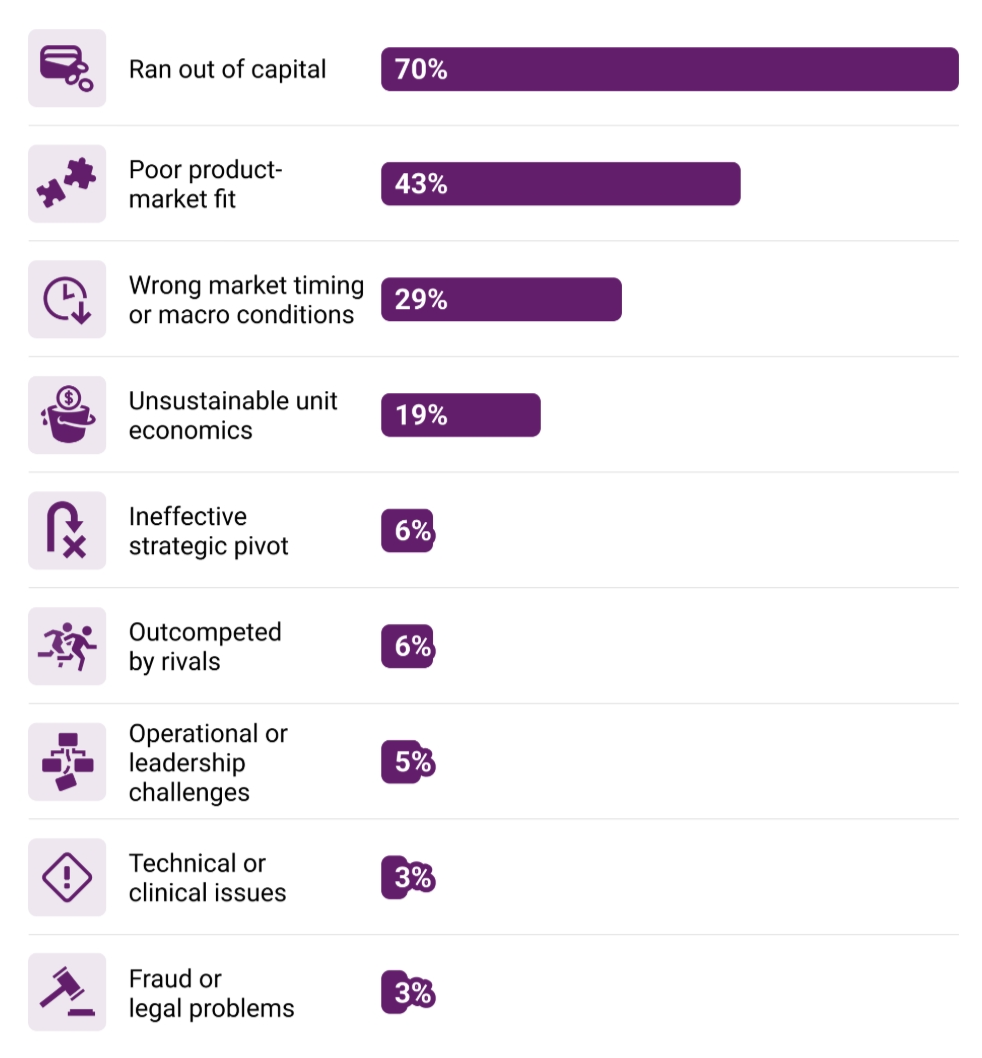
- Most launches fail for reasons you can control. Roughly 95% of the ~30,000 products launched each year miss the mark (MIT Professional Education), and the top root cause of startup failure is no product-market fit at 43% (CB Insights, 2026).
- Timing and readiness matter as much as the idea. Bad timing accounts for 29% of failures (CB Insights, 2026).
- Track five KPIs: adoption rate, retention, NPS, churn, and revenue growth.
- The launch does not end at "live." In-app guidance, announcements, and feedback are what turn a release into real adoption.
Roughly 95% of the estimated 30,000 products launched each year miss the mark, according to MIT Professional Education. That number is sobering, but it is also encouraging. Most launches do not fail because the idea was bad. They fail because of things a team can plan for: weak positioning, poor timing, or a rollout that stops the moment the product goes live.
This guide walks you through how to launch a new product from first research to post-launch adoption. You will get a repeatable launch process, a phased plan you can copy, the KPIs worth tracking, and the in-app tactics that keep momentum going after launch day. By the end, you will have a framework to put your product in the successful minority.
Launching a whole product vs. a single feature? This guide covers launching a new product end to end. If you are rolling out one new capability inside an existing app, the mechanics differ – start with our feature launch guide instead.
What is a product launch?
A product launch is the coordinated process of bringing a new product to market and driving its adoption. It spans market research, positioning, go-to-market coordination, the release itself, and the follow-up that turns early users into loyal ones.
The exact steps vary by market, product category, budget, and expected return. But nearly every successful launch moves through the same backbone: understand the market, sharpen the message, align the team, ship, and then measure and iterate.
Here is the process at a glance.
When is the right time to launch a new product?
The right time to launch is when your product is genuinely ready and the market is receptive – not before, and not so late that a competitor claims the space first. Timing is not a footnote. Bad timing is the second-biggest root cause of failure, behind only poor product-market fit, per CB Insights' 2026 analysis of 400+ startup post-mortems.
Two checks settle the question.
Research market conditions. Analyze industry trends, competitor moves, and customer feedback before you commit to a date. Factor in economics and seasonality. At Product Fruits, for example, we plan around key periods like the end-of-year holidays so a launch lands when our audience is actually paying attention, not out of office.
Evaluate readiness. Your product should clear more than basic quality standards before it meets the wider market. Run a thorough beta, gather real user feedback, and refine. Once beta results are consistently positive and users hit value without hand-holding, you are ready to move to broader communication. Rush this and you ship something unpolished. Wait too long and you hand competitors an opening.
Why a strong product launch matters
A strong launch does more than announce a product – it sets the trajectory for adoption, revenue, and how your team operates next time. Three effects stand out.
First impressions define the narrative. The first weeks of a product's life are when users, press, and prospects form their opinion. A clear launch makes your value proposition unmistakable and lowers friction for early adopters, which is exactly where most products lose people.
Momentum drives revenue – if you sustain it. A good launch creates a spike in attention and pipeline. The catch is that the spike fades fast unless you follow up. Analysis from the Product Marketing Alliance shows launch-driven pipeline lift decaying quarter over quarter without sustained post-launch activity. The launch is the start of the revenue story, not the end.
It aligns the organization. A launch forces product, marketing, sales, and customer success to agree on positioning, channels, and metrics. That shared understanding is an asset you carry into every future release.
How to build a product launch strategy
A winning product launch strategy aligns the launch with business goals, tells a clear story, coordinates every team, and plans for what could go wrong. Work through these five moves.
Align with business objectives
Start by connecting the launch to the numbers that matter. Ask how the product contributes to revenue, whether it supports acquisition or user retention, and what role it plays in your positioning. From there, pick KPIs that reflect both product and business success – conversion, adoption, satisfaction – so every team pulls toward the same outcome.
Craft a launch narrative
Every product has a story, and yours should center on the value users get. Begin with competitor analysis to find the gap, then build a narrative around the pain you remove. A useful tactic from experienced PMMs: tie a new launch into your existing company story rather than inventing a separate one, so the product feels like a natural next chapter, not a detour.
Coordinate the go-to-market
A launch is not a solo act for the PM. Success depends on product, marketing, sales, and customer success moving together. Measuring that coordination is genuinely hard – 62.8% of teams say quantifying launch impact is a challenge, per the Product Marketing Alliance's State of Go-to-Market report. Reduce the guesswork with a few basics: pick the right channels, run regular sync-ups, share the messaging framework and feature benefits, and train sales on how to demo the product.
Plan for risk
Even strong plans hit snags. Name the likely ones up front – technical glitches, content delays, a competitor's surprise launch – and prepare contingencies. Keep backup content ready for in-app announcements and agree on a rapid-response plan for customer concerns before you need it.
Test early and often
A launch strategy lives or dies on how well you understand users before the reveal. Run beta programs or pilot launches, and segment testers so you cover different user types. Use what you learn to fine-tune key features and clear the roadblocks that would otherwise stall adoption on day one.
The product launch plan: pre-, launch, and post-launch
A structured launch plan is your roadmap, and it works in three phases. Each has a distinct job, and skipping any one is where momentum leaks. Use the checklist below as your starting template.
For deeper, template-ready steps, see our SaaS product launch checklist.
Product launch KPIs and how to track them
The KPIs that matter most for a new product launch are adoption rate, customer retention, Net Promoter Score, churn, and revenue growth. Together they tell you whether users are showing up, sticking around, and recommending you. Define each one before launch so you are not scrambling to instrument analytics after go-live.
Measuring launch impact is the part teams struggle with most, so make the numbers easy to reach. With the Product Fruits MCP integration, you can connect your Product Fruits data to Claude, ChatGPT, or any AI assistant and ask in plain English which onboarding step is losing users. It is read-only, included in all plans, and needs no API key – just sign in. Want the fundamentals first? Read what adoption rate is and how to increase it.
How Product Fruits helps you launch inside your product
Launching a product is only the start. The real work is getting users to adopt and stick with it – and that happens inside your app, not in the press release. This is where Product Fruits, trusted by 1,300+ teams, fits into a launch.
Guide every user with Flows. Flows is Product Fruits' canvas-based builder for in-app journeys that branch by role, behavior, or plan and can reach users in-app or by email. Instead of a rigid tour everyone skips, a flow routes each user to the next right step. It ships with a ready-made "feature launch follow-up" template that introduces a new capability, helps users try it, then asks for feedback once they have an opinion. Elvin, the built-in AI, can watch you use your product and draft the flow for you, so you go from idea to live in minutes without a dev ticket.
Announce updates where users already are. A launch does not stop at the initial rollout. With in-app announcements – banners, pop-ups, and a newsfeed – you share updates directly in the app and target the right segments, so the right users see the right message.
Give users a clear path with checklists. Some users need structure. Onboarding checklists highlight the features that matter, track progress, and celebrate milestones, which keeps new users moving toward their first win.
Personalize with segmentation. Every user is different. Product Fruits' segmentation targets guidance by behavior and profile, so new users get a welcome path while power users get advanced tips – without overwhelming anyone.
Answer questions instantly with Elvin. Elvin, the AI copilot, works 24/7 to resolve common support questions right inside your product. During a launch, that means fewer repetitive tickets and users who get unstuck on their own.
Measure impact and act on it. Use the feedback widget to gather in-app reactions and the analytics dashboard to see whether new users are actually resonating with the release.
Do this, not that: Do not treat launch day as the finish line and move on. The launches that stick keep guiding, announcing, and listening for weeks afterward. That is the difference between a spike and real adoption.
The proof is in customer results. Keboola made onboarding 29% faster with Product Fruits, and FitnessPlayer cut trial-user churn by 70% and doubled conversions after launching its first onboarding flows.
Frequently asked questions
How do you launch a new product?
Launch a new product in three phases. Pre-launch: research the market, sharpen your positioning, and run a beta. Launch: coordinate a rollout across your app, email, and website, and collect real-time feedback. Post-launch: drive adoption with in-app onboarding, gather feedback, and review your KPIs to iterate. The launch continues well after go-live day.
What is a product launch strategy?
A product launch strategy is the plan that connects a product's release to business goals. It defines the target audience, the positioning and launch narrative, the go-to-market channels, the teams involved, and the KPIs used to measure success. A strong strategy also includes a risk plan and a post-launch approach to sustain momentum.
What are the stages of the product launch process?
The product launch process has five core stages: market research and segmentation, positioning and messaging, go-to-market alignment across teams, the release itself, and adoption and iteration. The exact steps vary by market, budget, and product category, but this backbone applies to almost every launch.
What KPIs should I track for a product launch?
Track five KPIs after a product launch: adoption rate, customer retention rate, Net Promoter Score (NPS), churn rate, and revenue growth. Together they show whether users are activating, staying, recommending you, and generating revenue. Define and instrument each metric before launch so you can measure impact from day one.
When is the best time to launch a new product?
The best time to launch is when your product clears quality and readiness checks and the market is receptive. Analyze industry trends, competitor timing, and seasonality, and confirm your beta results are consistently positive. Launching too early risks an unpolished product. Launching too late lets competitors claim the space first.
How is launching a new product different from launching a feature?
Launching a new product means bringing an entirely new offering to market, with full positioning, go-to-market, and adoption work. A feature launch introduces one new capability inside an existing product to your current users. The core phases are similar, but a feature launch leans more on in-app communication and less on external market-building.
What tools help with a product launch?
Product launch tools fall into a few buckets: analytics to track KPIs, marketing tools for outreach, and product adoption platforms for in-app onboarding and communication. A platform like Product Fruits combines flows, in-app announcements, checklists, an AI copilot, and feedback so you can drive adoption after launch without engineering time.
Launch your product with confidence
Launching a new product is a pivotal moment, and the odds improve dramatically when you plan the strategy, align every team, and keep guiding users after go-live. The idea is rarely what makes or breaks a launch – execution is.
That execution mostly happens inside your product. Product Fruits gives you the flows, announcements, checklists, and feedback tools to turn a release into real adoption, without waiting on developers. From a first welcome to a post-launch nudge, it helps every user find the next right step.
Ready to launch your next product with confidence? Book a demo or start your free trial today and see how Product Fruits fits into your launch.


Weekly newsletter
Get the latest releases, tips, articles, and exclusive interviews delivered to your inbox weekly—no spam!