The best Chameleon alternatives for 2026 (when Chameleon's pricing is too high)



TL;DR
- Chameleon (chameleon.io, formerly trychameleon) is a solid product adoption platform, but it gets expensive fast. The Startup plan is $279/mo for 10 live experiences, and unlimited experiences only come with Growth at $1,250/mo billed annually.
- Best value: Product Fruits. Tours, checklists, hints, surveys, an in-app help center and a knowledge base from $111/mo (annual billing).
- Cheapest paid tool: HelpHero from $55/mo, for simple tours and checklists.
- Developer-friendly: Userflow.
- Most analytics: Userpilot, Appcues or Pendo.
- Stay with Chameleon if A/B testing or deep design control is central to how you work.
Most people searching for a Chameleon alternative aren't unhappy with the product. They're unhappy with the bill. Chameleon, the in-app onboarding and product adoption platform from chameleon.io, prices by monthly tracked users and caps how many experiences you can run on its cheaper plans. Once you need more tours or more users, the next plan up costs a lot more.
This guide explains what Chameleon costs in 2026, why teams move on, and which seven alternatives fit which kind of team, with real starting prices and G2 ratings for each.
What Chameleon costs in 2026
Chameleon has four plans. Prices below come from Chameleon's pricing page as of September 2026.
A few extras add up. SAML SSO is a $4,000/year add-on on Growth, and extra admin seats cost $3,000/year per five.
Chameleon has no free plan. You get a 14-day trial.
Why teams look for a Chameleon alternative
The price ladder is steep. The $279 Startup plan looks reasonable until you hit the 10-experience cap. Going past it means Pro at $750/mo, which still stops at 20. Unlimited experiences start at $1,250/mo billed annually, roughly $15,000 a year.
For a small product team, that's a big jump for "a few more tours". It's a common complaint in reviews.
"Only the pricing is the only issue so far, the product works great!"
— CEO, Small-Business · G2
Costs climb with your user count. Chameleon bills by monthly tracked users and, per its help center, charges based on the maximum number of MTUs in each billing period.
"Pricing might be a barrier for early-stage startups."
— Project Manager, Mid-Market · G2
Tours need upkeep. Like most tools that anchor to on-page elements, Chameleon experiences can break when your UI changes. A G2 reviewer mentioned that "tours can also occasionally break if an element is missing or changed in the app." Teams that ship often end up spending time maintaining tours.
Analytics are light. Chameleon tells you how your experiences perform. It isn't a product analytics tool, so most teams still run a separate analytics platform alongside it.
Chameleon alternatives at a glance
For reference, Chameleon itself is rated 4.4 on G2 and starts at $279/mo.
The 7 best Chameleon alternatives, grouped by what you need
Best value for small teams
1. Product Fruits – best value
An AI-native onboarding and product adoption platform used by 1,300+ companies. For small teams leaving Chameleon over price, it covers the same core job for less than half the entry cost.
Pros: One snippet covers tours, checklists, hints, announcements, surveys, an in-app help center and a knowledge base. Elvin AI creates onboarding flows for you. The Starter plan includes 15 tours and 50 hints, compared with Chameleon's 10 live experiences at $279.
Cons: Web-first, so if native mobile in-app guidance is your main need, a dedicated mobile tool will go deeper.
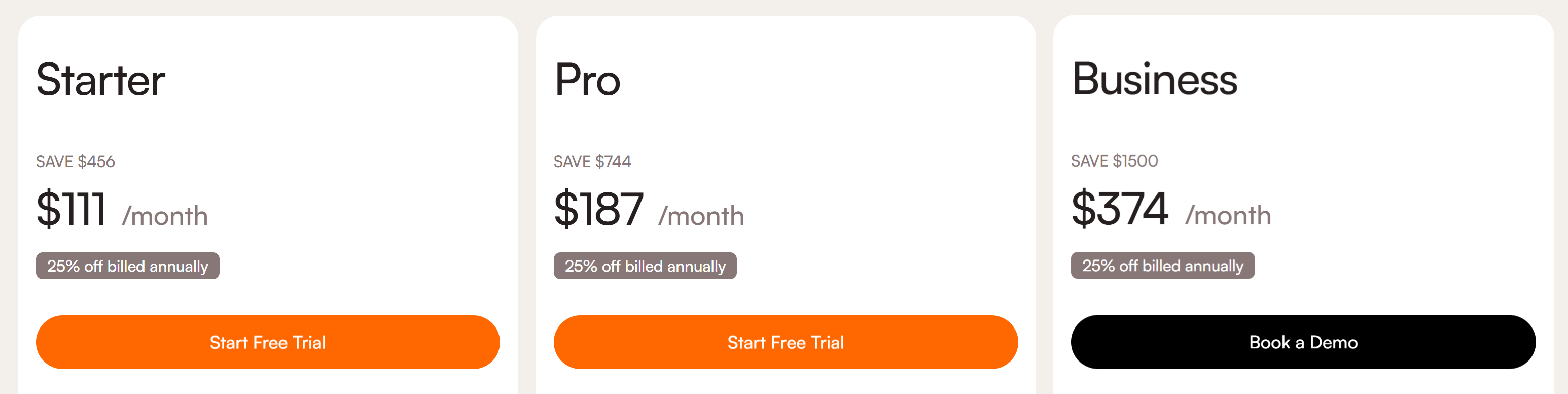
Pricing: $111/mo billed annually (1,500 MAU) · G2: 4.7
2. UserGuiding – simple onboarding for startups
A no-code onboarding tool popular with early-stage teams. It covers the essentials (tours, checklists, tooltips) with an easy editor.
Pros: Quick to learn and set up. A friendly starting point for teams that only need the basics.
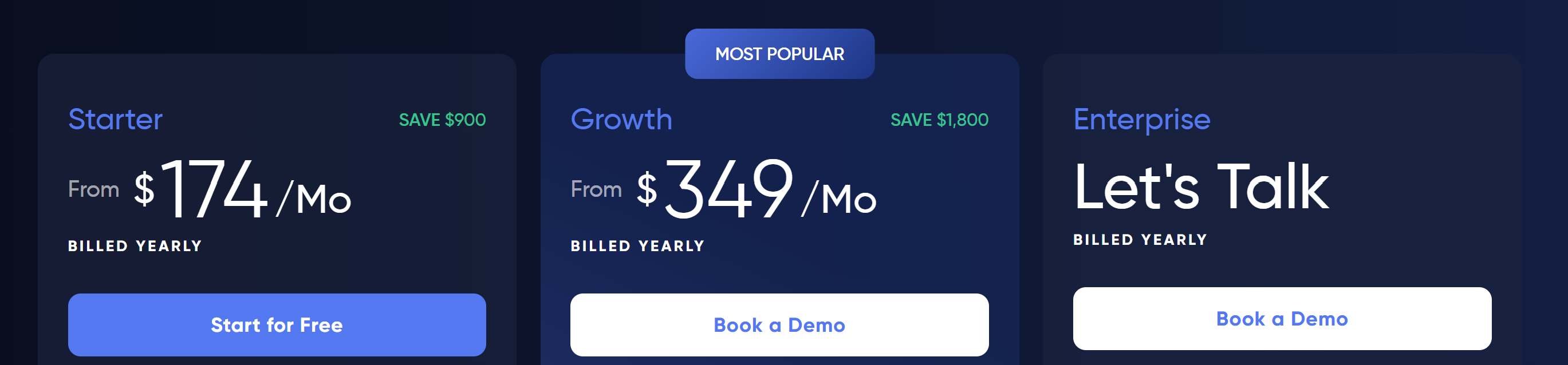
Cons: The Starter plan is tight: one checklist, one survey and one banner. Higher limits mean the $349/mo Growth plan.
Pricing: $174/mo billed annually (2,000 MAU) · G2: 4.7
3. HelpHero – the cheapest paid option
A lightweight tool for teams that want product tours and nothing they won't use.
Pros: The lowest entry price here, with unlimited seats and all features on every plan.
Cons: Tours, checklists and beacons only. No surveys, no knowledge base, no in-app help center, so it's a point tool rather than a platform.
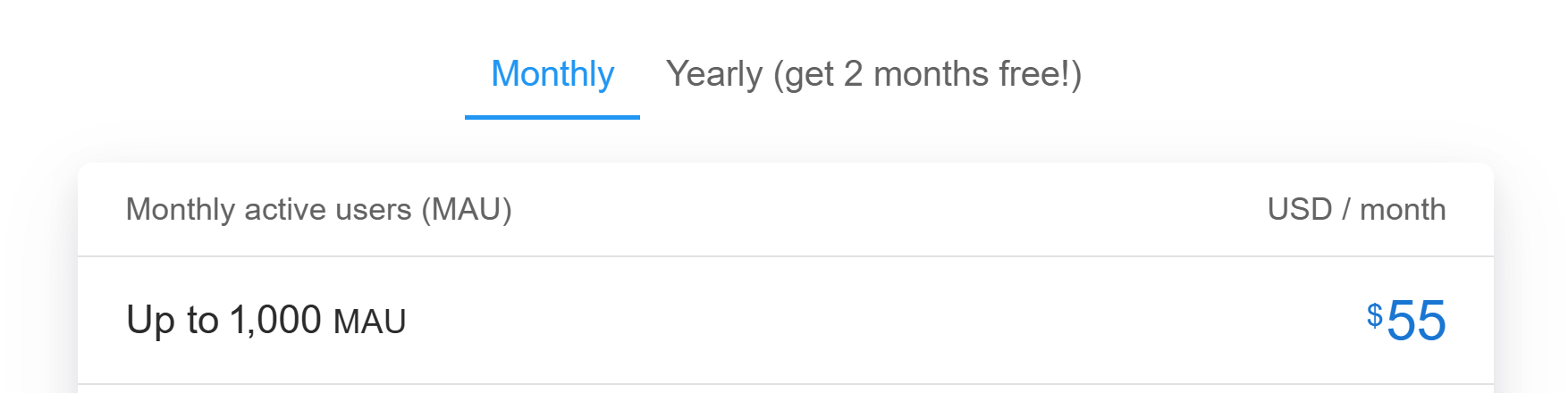
Pricing: $55/mo (1,000 MAU) · G2: 4.9 (from just 18 reviews)
Developer-friendly
4. Userflow – flexible flows for technical teams
A fast, clean builder with strong theming and an API-first approach that developer-heavy teams like.
Pros: Flexible flows, unlimited seats and plenty of room to customize.
Cons: The entry plan includes only 1,000 MAU, and every extra 1,000 users adds to the bill. Model the cost at your real user count.
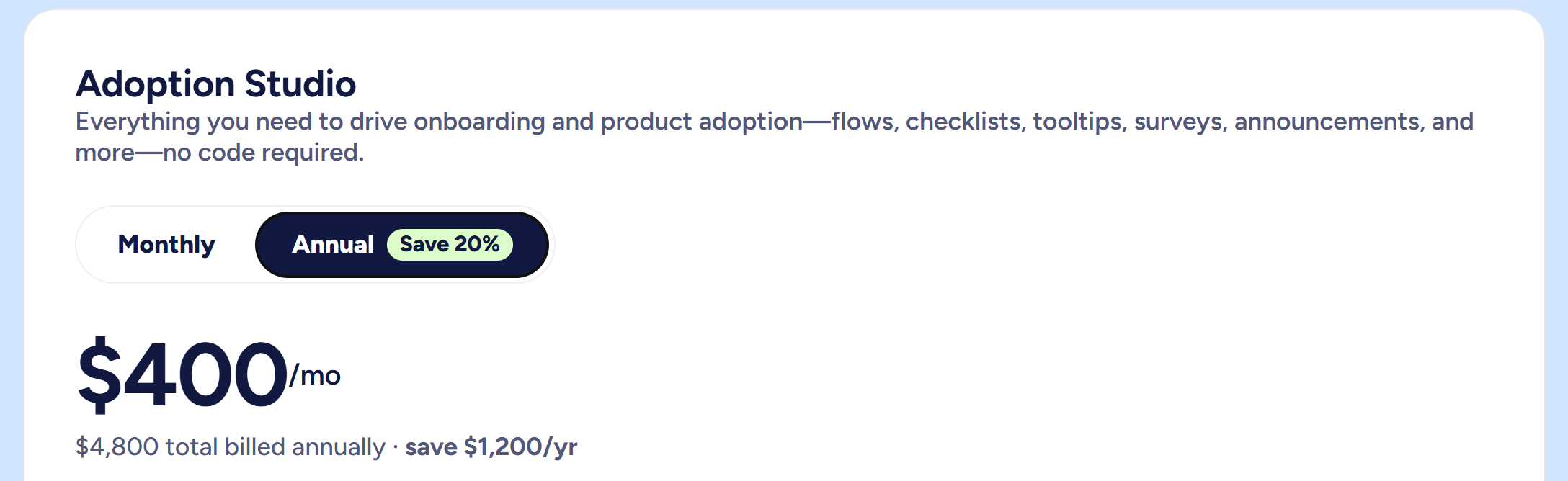
Pricing: $400/mo billed annually, $500/mo billed monthly · G2: 4.8
More analytics, bigger budget
5. Userpilot – onboarding plus product analytics
Pairs in-app onboarding with product analytics, which suits mid-market teams that want usage data and guidance in one place.
Pros: Onboarding and analytics in one platform, so you can act on usage data without a separate tool.
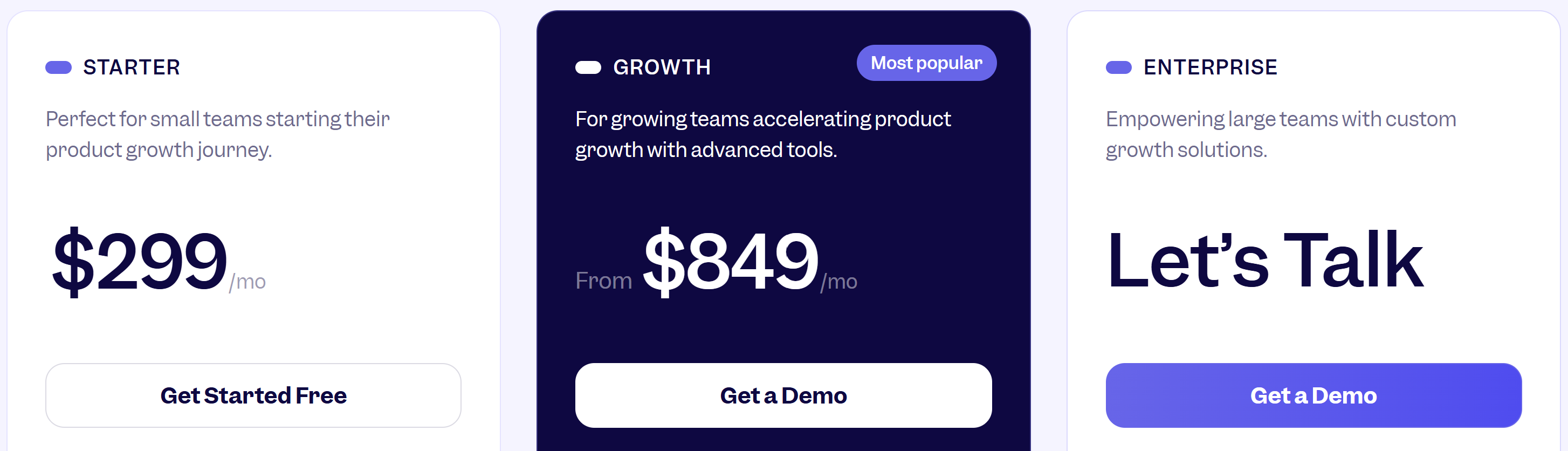
Cons: The deeper analytics sit on the Growth plan, from $849/mo. If you already run an analytics platform, you may end up paying twice.
Pricing: $299/mo (2,000 MAU) · G2: 4.6
6. Appcues – established and sales-led
One of the older names in onboarding, with a polished builder and strong brand recognition.
Pros: A mature feature set and a safe, well-known choice.
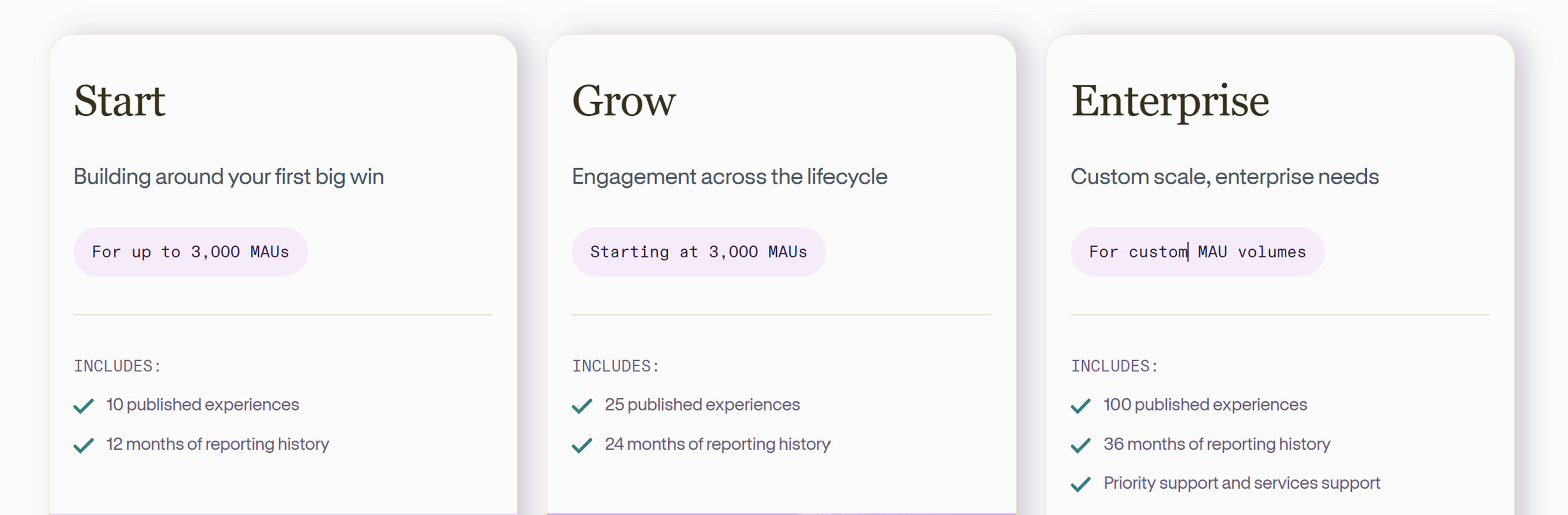
Cons: Quote-only pricing, so you can't self-serve your way in. The entry Start plan also limits you to 10 published experiences, the same kind of cap that pushes teams off Chameleon.
Pricing: Quote only (Start plan up to 3,000 MAU) · G2: 4.6
7. Pendo – analytics first
A product analytics platform with in-app guides built in. It's the pick when analytics, not onboarding, is the main job.
Pros: Deep product analytics, session replay and in-app guides in one platform.
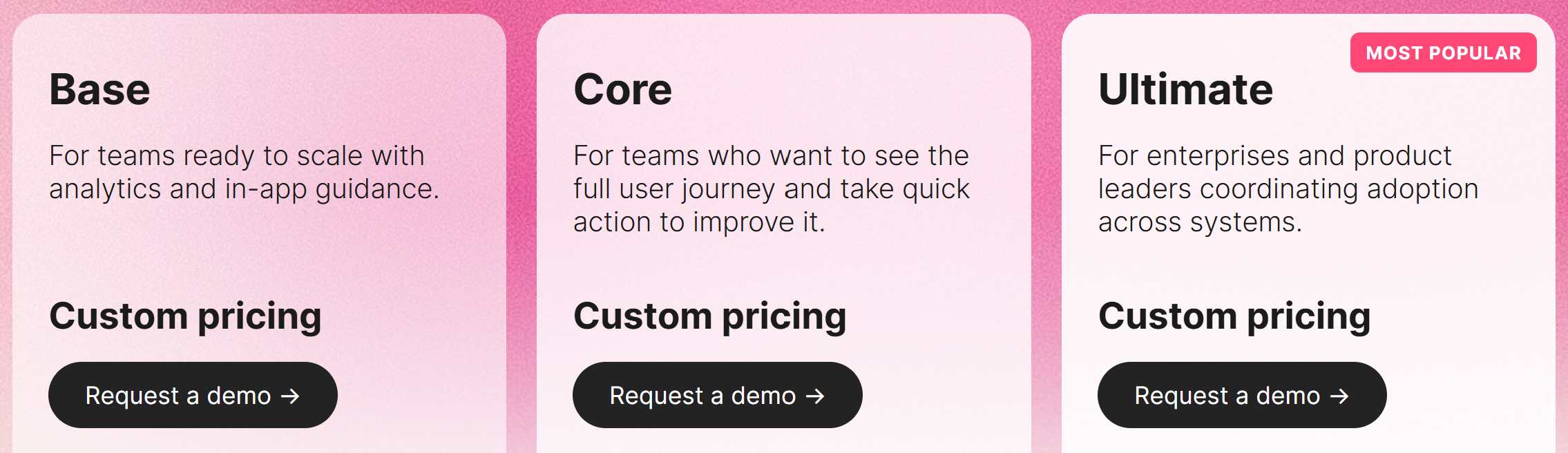
Cons: It's an expensive, enterprise-leaning platform. Paid plans are custom-quoted and typically start above $1,000/mo, and Vendr puts the median contract at about $48,600 a year. Small teams that mainly need onboarding end up paying for far more than they use.
Pricing: Custom (typically $1,000+/mo) · G2: 4.4
A closer look at Product Fruits
Chameleon rations experiences by plan. Product Fruits gives a small team room to build: 15 tours, 50 hints and unlimited announcements on the entry plan, for $111/mo billed annually instead of $279.
Everything sits behind one snippet. Flows is the canvas-based builder for guided experiences. You lay out steps visually, branch them on conditions you define (what the user has done, which segment they're in, where they are in the product), and drop Elvin AI steps right into the journey. It's behavior-aware onboarding without an engineering ticket for every change.
Elvin AI also powers the in-app help widget, with chat, your knowledge base and configured tabs, so users get answers in the moment instead of opening a ticket. Your documentation lives in the knowledge base, giving people a self-serve place to search. And the Product Fruits MCP connection lets an AI assistant like Claude or Cursor read your Product Fruits data, if you want adoption data inside your own AI tools.
Reviewers point to the same trade. As one senior instructional designer put it on G2:
"The pricing feels fair for the amount of guidance we can centralize in one place."
— Instructional Designer, Mid-Market · G2
Free and open-source Chameleon alternatives
None of the tools above has a free plan, and Chameleon doesn't either. If the budget really is zero, open-source is the only route.
Open-source libraries such as Shepherd.js and Intro.js, or a self-hosted tool like Usertour, cost nothing to license for many uses (check each project's license terms for commercial use). The catch is that your developers build, style and maintain every tour. For teams without spare engineering time, a low-cost paid tool usually ends up cheaper.
How to choose the right Chameleon alternative
Four questions narrow the list fast:
- What's your budget at your real user count? Price every tool at the number of monthly users you'll have in a year, not today.
- Who builds the experiences? Product managers and marketers need a no-code builder. Developer-led teams can use Userflow or open-source libraries.
- Do you need analytics in the same tool? If yes, look at Userpilot or Pendo. If you already have analytics, don't pay for it twice.
- How many experiences will you run? If you plan more than a handful of tours, avoid plans that cap live experiences.
When Chameleon is still the right choice
Chameleon is a good product, and switching isn't always right. Stay if:
- You run lots of A/B tests on your in-app experiences.
- You need deep design control with custom CSS themes.
- HelpBar, interactive demos or Chameleon's AI agents are part of your workflow.
- You're an enterprise team that needs its governance, localization and roles and permissions, and the budget is already there.
How to migrate from Chameleon
Moving is simpler than it sounds, because the alternative tools install with a single snippet and build content in a visual editor.
- Audit what's live. List your active Chameleon experiences and note which ones actually get used.
- Rebuild the top few first. Start with the onboarding tour and checklist that most new users see.
- Run both tools briefly. Launch the new experiences to a segment, check that they fire correctly, then turn off the Chameleon versions.
- Switch off and cancel. Once everything's live, remove the Chameleon snippet before your renewal date.
Most small teams rebuild their core flows in days, not weeks.
Frequently asked questions
Is Chameleon's pricing too high for small teams?
For many small teams, yes. Chameleon's Startup plan is $279/mo for 2,000 tracked users and only 10 live experiences. Going beyond that means Pro at $750/mo or Growth at $1,250/mo billed annually. Tools like Product Fruits ($111/mo billed annually) or HelpHero ($55/mo) cover the core onboarding job for much less.
How much does Chameleon cost?
Chameleon starts at $279/mo on the Startup plan (2,000 MTUs, 10 live experiences). Pro starts at $750/mo, Growth at $1,250/mo billed annually, and Enterprise is custom. According to Vendr, the median Chameleon contract is $25,750 a year.
What are the best Chameleon alternatives?
The best Chameleon alternatives in 2026 are Product Fruits (best value), UserGuiding (simplest for startups), HelpHero (cheapest), Userflow (developer-friendly), and Userpilot, Appcues or Pendo for teams that want more analytics and have a bigger budget.
What are affordable Chameleon alternatives?
HelpHero is the cheapest at $55/mo, but it only covers tours, checklists and beacons. Product Fruits starts at $111/mo billed annually and adds surveys, an in-app help center, a knowledge base and Elvin AI. UserGuiding starts at $174/mo billed annually. All three cost less than Chameleon's $279 Startup plan.
What's the best Chameleon alternative for a small team or small business?
Product Fruits is the best-value Chameleon alternative for small teams. It covers tours, checklists, hints, surveys and in-app help in one snippet from $111/mo billed annually, and its entry plan includes more tours than Chameleon's. UserGuiding is a good pick if you only need basic onboarding.
Is there a free Chameleon alternative?
Not a full-featured one. Open-source libraries like Shepherd.js and Intro.js cost nothing to license for many uses, but your developers build and maintain every tour. Chameleon itself has no free plan, only a 14-day trial. If budget is the constraint, HelpHero ($55/mo) or Product Fruits ($111/mo billed annually) is usually cheaper than the engineering time.
How do I migrate from Chameleon?
List your live Chameleon experiences, rebuild the most-used tours and checklists in the new tool first, and test them on a small segment. Once they work, turn off the Chameleon versions and remove its snippet before renewal. Most small teams finish in days.
Why is Chameleon so expensive?
Chameleon prices by monthly tracked users and limits live experiences on its lower plans, so costs rise as you grow or build more. Unlimited experiences start on the Growth plan at $1,250/mo billed annually, and add-ons like SSO ($4,000/year) and extra seats cost more.
Choose the best Chameleon alternative today
If Chameleon's price ladder is the problem, you don't need to keep climbing it. Product Fruits gives small product teams tours, checklists, hints, announcements, surveys, an in-app help center and a knowledge base in one snippet, powered by Elvin AI, from $111/mo billed annually.
Start your 14-day free trial (no credit card), or book a demo and we'll map your existing Chameleon guides to Product Fruits before you commit to anything. Full plan details are on our pricing page.


Weekly newsletter
Get the latest releases, tips, articles, and exclusive interviews delivered to your inbox weekly—no spam!