Best Product-Led Growth Tools in 2026: Full Comparison


Best product-led growth tools in 2026: the complete comparison
TL;DR: Product-led growth (PLG) tools help the product itself drive signups, activation, and expansion – so users reach value without a sales call. A full PLG stack spans five jobs: onboarding and activation, product analytics, in-app communication, customer support and deflection, and user feedback. This guide compares the leading tools in each category using current G2 ratings, real reviews, and starting prices. If you want one platform that covers onboarding, in-app messaging, support deflection, and feedback together, Product Fruits is the strongest all-in-one pick. And if you need a deep point solution, we flag the best specialists too.
Product-led growth flips the old playbook. Instead of a sales team carrying every deal, the product does the persuading – users try it, reach an "aha" moment, and upgrade on their own. That only works if you can guide, measure, and talk to users inside the product, which is exactly what PLG tools do.
The catch: the category has sprawled. There are onboarding builders, analytics suites, in-app chat tools, support platforms, and feedback apps, and most teams end up stitching several together. This guide maps the landscape by the job each tool does, compares the leaders with current independent ratings and pricing, and helps you decide between an all-in-one platform and a best-of-breed stack.
All-in-one vs. best-of-breed: the biggest decision in PLG tooling isn't which onboarding tool to buy – it's whether to run five specialist tools or one platform that covers most of the jobs. All-in-one wins on cost, setup speed, and a single view of the user. Best-of-breed wins when one job (say, deep product analytics) is so central that you need the most powerful specialist. We'll call out which is the better fit as we go.
What are product-led growth (PLG) tools?
PLG tools are the software that lets your product drive its own growth. They help you onboard new users, show them value fast, understand how they behave, communicate in context, resolve questions without a human, and collect feedback that shapes the roadmap. Together they turn a signup into an activated, paying, expanding customer with as little friction as possible.
They matter because acquisition is expensive and attention is short. When users can self-serve their way to value, you lower acquisition cost, shorten time-to-value, and free your team to focus on the accounts that need a human. The tools below are how PLG teams make that happen.
The five essential categories of a PLG stack
Most PLG work falls into five jobs. A tool usually leads in one and dabbles in others.
- Onboarding and activation – guide users to first value with tours, flows, checklists, and hints.
- Product analytics – understand behavior, funnels, and retention.
- In-app communication – announce, nudge, and message users in context.
- Customer support and deflection – answer questions in-product, ideally with AI, before they become tickets.
- User feedback and research – capture NPS, surveys, feature requests, and session insight.
The sections below cover the leading tools in each, with current G2 ratings and starting prices. A quick note on the ratings: they're pulled from G2, an independent review platform, so they reflect verified users rather than vendor marketing. Check each linked G2 page for the latest figure before you cite it.
On pricing: every price below is the lowest published paid tier as of September 2026, and the models differ – some tools charge per monthly active user (MAU or MTU), others per seat, per event, or per AI resolution – so compare the model, not just the headline number. Free tiers and enterprise (custom) pricing are noted where they apply. Vendors change pricing often, so confirm on the vendor's page before you commit.
Category 1: Onboarding and activation tools
This is the heart of PLG – getting a new user to the "aha" moment. These tools build product tours, onboarding checklists, in-app flows, and contextual hints, usually without engineering.
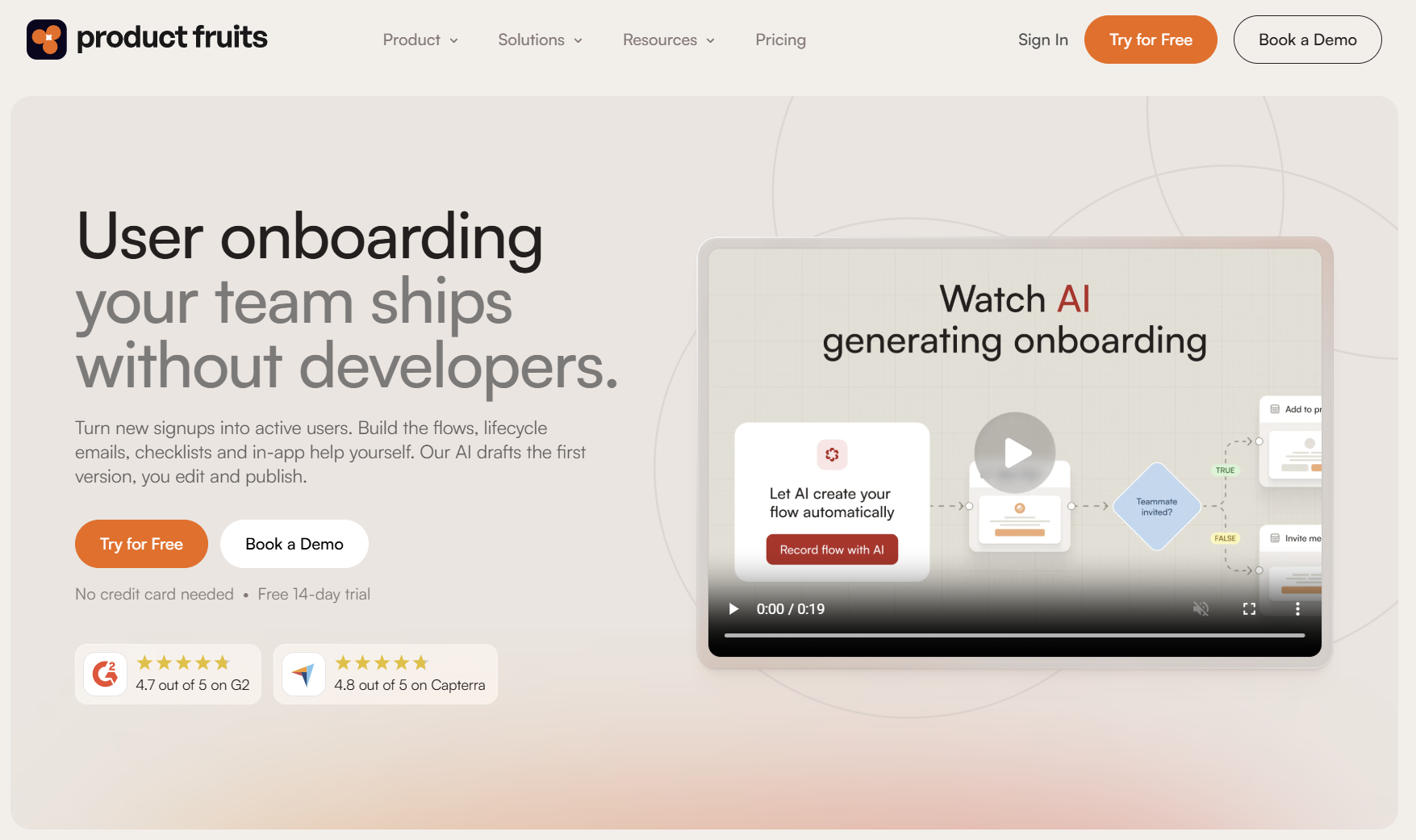
Product Fruits is the all-in-one option. Alongside onboarding, it bundles in-app announcements, a knowledge base, feedback and NPS, and the Elvin AI Copilot – so a single platform covers several PLG jobs at once. It holds a 4.6/5 on G2 across 254 reviews and starts at $111/month. As one reviewer put it: "The support team is also a standout. Their training materials (and Elvin! – their AI chatbot) answer pretty much every question I've had" (Natalia F., Product Marketing Manager, mid-market).
UserGuiding (4.7/5, 779 reviews) is the value pick – quick to stand up and genuinely no-code, with users noting content goes "live within minutes."
Userpilot (4.6/5, 1,013 reviews) pairs onboarding with built-in product analytics, which suits teams that want targeting and flows in one place.
Appcues (4.6/5, 359 reviews) is a long-standing favorite for shipping guides "without involving the dev team."
WalkMe (4.5/5, 579 reviews) is enterprise-grade digital adoption, strong when you need to guide users across many complex apps, not just your own product. It's the one tool here with no public pricing.
Chameleon (4.4/5, 361 reviews) leans into deep UI customization for design-conscious teams.
Category 2: Product analytics tools
Analytics tools tell you what users actually do – which features they touch, where they drop off, and what predicts retention. They're the measurement layer under every PLG decision.
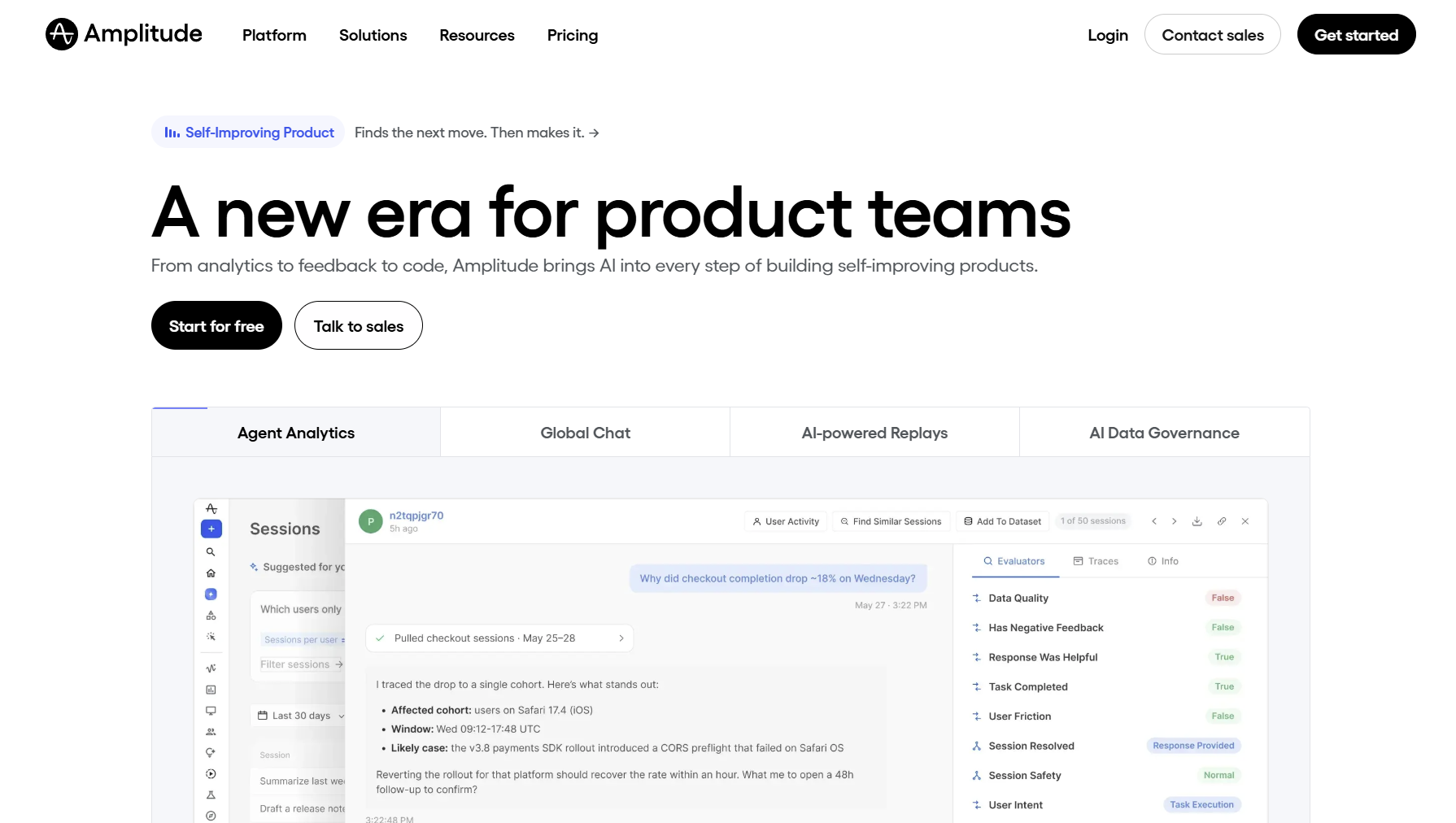
Amplitude (4.5/5, 2,991 reviews) is the depth leader – one reviewer notes building "funnels, slicing retention curves, and segmenting behavioral cohorts takes minutes instead of submitting tickets to data analysts." Mixpanel (4.5/5, 1,372 reviews) offers similar event analytics with a design users praise. Pendo (4.4/5, 1,809 reviews) combines analytics with in-app guidance, which appeals to bigger teams with the budget for it – though paid pricing is custom-quote only.
If your PLG motion lives or dies on analytics depth, a specialist here is worth it. If you mainly need to see whether onboarding is working, the analytics inside an onboarding platform may be enough.
Category 3 & 4 : In-app communication and customer support
These two jobs overlap, so we cover them together. In-app communication is how you announce features, run product messaging, and nudge users. Customer support and deflection is how you answer questions in-product – increasingly with AI – so they never become tickets.
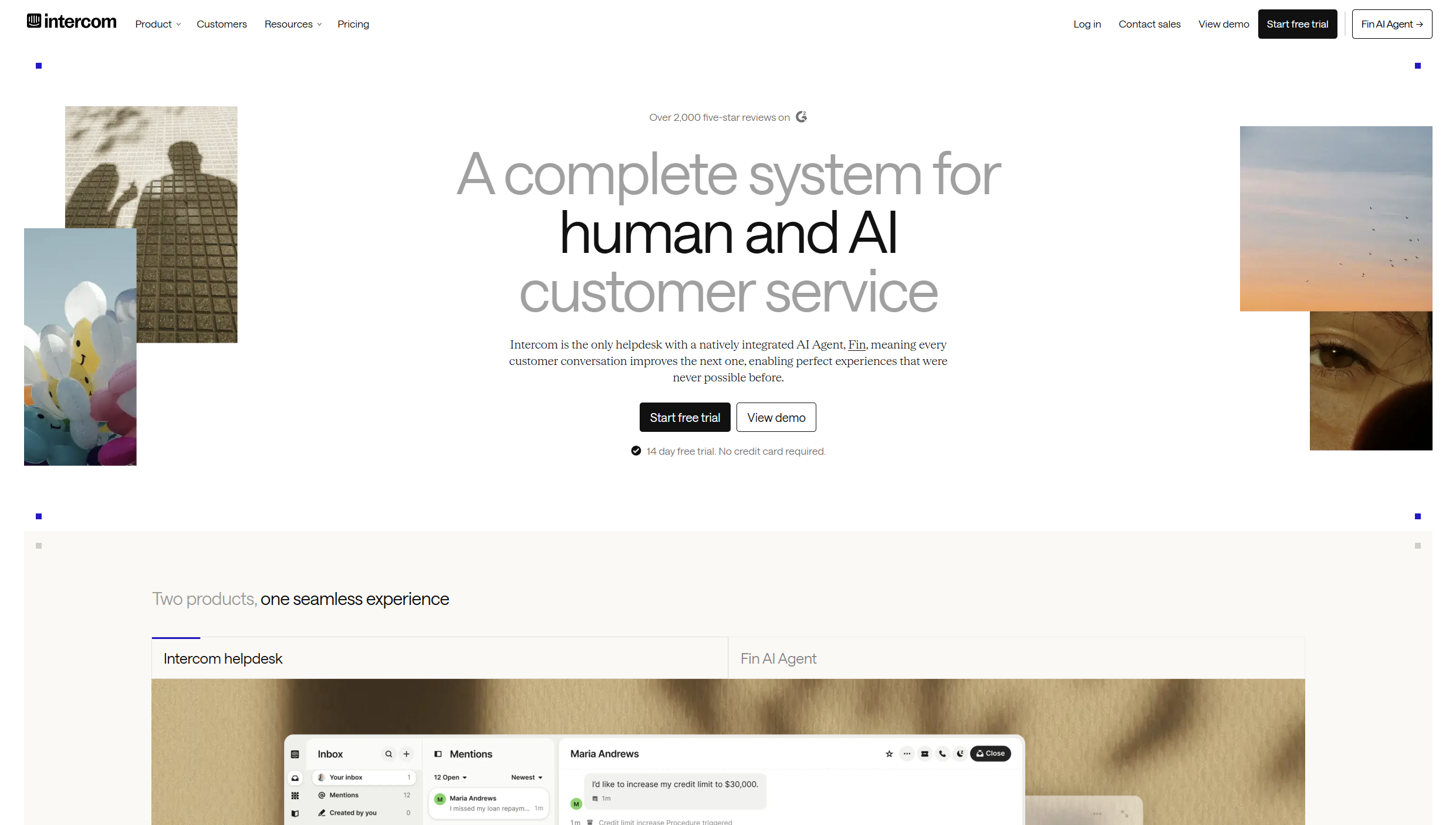
Intercom (4.5/5, 3,911 reviews) leads on AI-assisted support, with users highlighting its Fin AI agent's "query resolution capabilities." Zendesk (4.3/5, 7,074 reviews) is the incumbent ticketing suite. Both are powerful but priced and scoped as standalone support platforms, and per-seat costs add up as the team grows.
Product Fruits approaches support from the PLG side. Its Elvin Copilot answers user questions in a chat-style widget using only the content sources your team maintains, and it draws on the same knowledge base and onboarding content already in the platform. Product Fruits reports Elvin can automatically resolve up to 93% of support questions (Product Fruits). Because it's part of the onboarding platform, self-service support isn't a separate tool to buy or integrate.
Category 5: User feedback and research tools
Feedback tools close the loop – NPS, in-app surveys, feature requests, and behavioral insight that tells you what to build next.
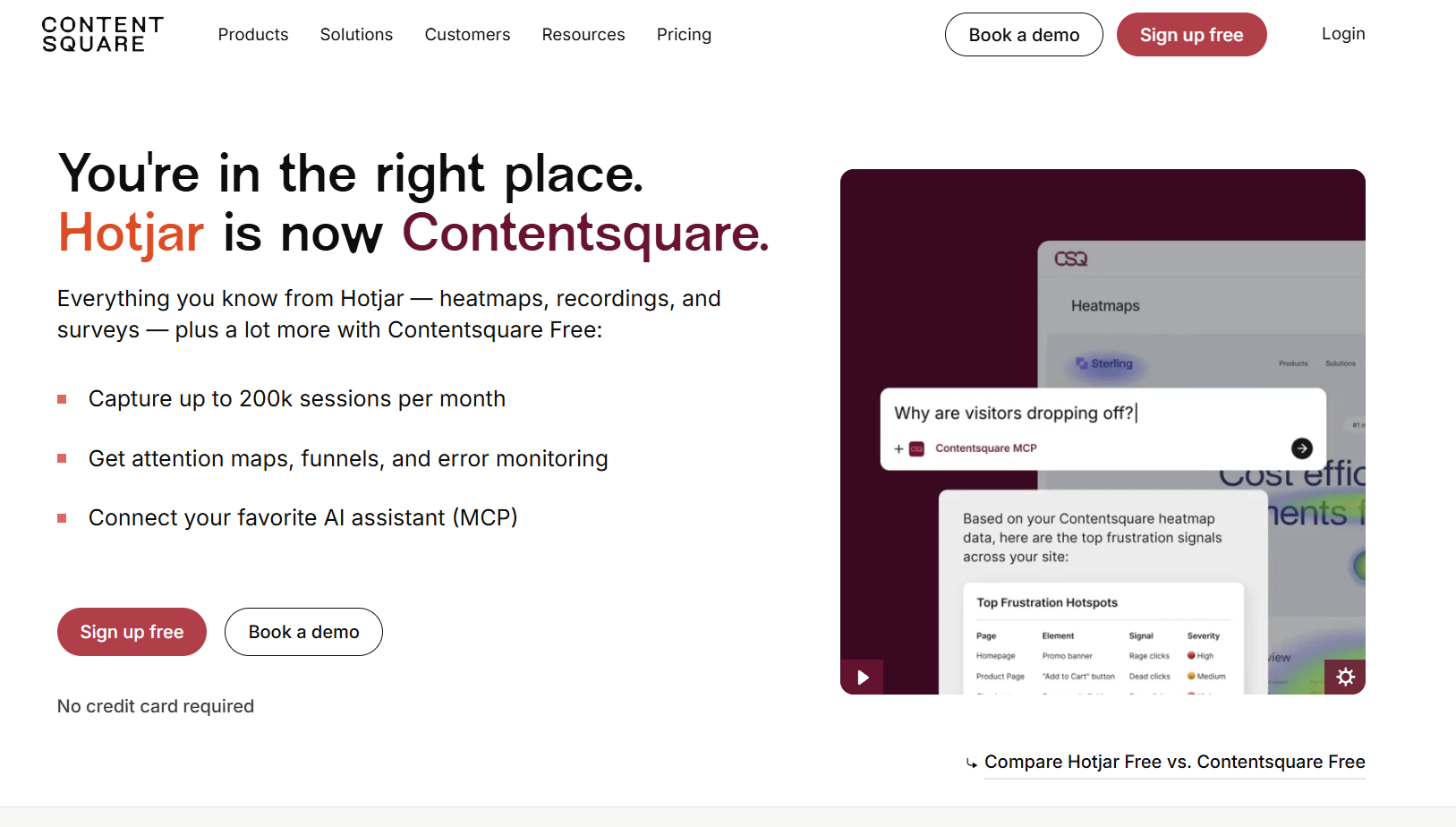
Hotjar - now Contentsquare (4.3/5, 345 reviews) is the go-to for heatmaps and session recordings – "make it easy to spot UX and UI issues," in one user's words. Featurebase is a lightweight way to run public feature-request boards. Product Fruits covers the quantitative side with in-app NPS and targeted surveys that sit right next to your onboarding, so you can act on a signal (say, a low NPS score) with an in-product flow immediately.
Why Product Fruits is a strong all-in-one PLG platform
Look back at the five categories and one thing stands out: Product Fruits appears in four of them. That's the case for an all-in-one platform. Instead of buying an onboarding tool, a knowledge base, a survey app, and a support widget – then paying to integrate them – you get onboarding (tours, Flows, checklists, hints), in-app announcements, a knowledge base, NPS and surveys, and the Elvin AI Copilot in one place.
Three things make it a genuine PLG platform rather than a bundle:
AI that does the work. Flows are multi-step guided experiences that branch based on what the user does, and you can build them by recording your product with Elvin rather than starting from a blank canvas. On the support side, Elvin Copilot answers from your own content sources.
Independent proof, not just claims. Product Fruits holds a 4.6/5 on G2 from 254 verified reviews – in the same range as tools that do a fraction of what it does.
Accessible pricing. Plans start at $111/month and scale by monthly active users, with Starter, Pro, and Business tiers (Product Fruits pricing). For a growing SaaS, one platform at that price usually beats the combined bill of several point tools – especially once per-seat support tools and custom-quote analytics are added in.
It won't replace a heavyweight analytics suite like Amplitude for deep data science, and enterprises standardizing digital adoption across dozens of apps may still want WalkMe. But for most SaaS teams running a PLG motion, one platform covering the core jobs is simpler, cheaper, and faster to value.
How to choose the right PLG tool for your SaaS
Start from the job you most need done, not the tool with the longest feature list.
Then apply three tie-breakers: total cost across every tool you'd need, time to first value (how fast a non-technical teammate can ship something), and whether the data lives in one place or scatters across apps. All-in-one platforms win the first and third by design; specialists win when one job is your whole business.
Frequently asked questions
What are product-led growth tools?
Product-led growth tools are software that lets your product drive its own growth – onboarding users, measuring behavior, communicating in-app, deflecting support questions, and collecting feedback. They span five categories: onboarding and activation, product analytics, in-app communication, customer support, and user feedback. Some tools specialize in one; all-in-one platforms cover several.
What is the best all-in-one PLG tool?
For most SaaS teams, Product Fruits is the strongest all-in-one option. It combines onboarding (tours, flows, checklists, hints), in-app announcements, a knowledge base, NPS and surveys, and the Elvin AI Copilot in one platform, holds a 4.6/5 on G2 from 254 reviews, and starts at $111/month. Teams that need heavyweight analytics or enterprise-wide digital adoption may still add a specialist.
All-in-one platform or best-of-breed stack – which is better?
It depends on where your PLG motion is hardest. An all-in-one platform is cheaper, faster to set up, and keeps user data in one place, which suits most growing SaaS teams. A best-of-breed stack makes sense when a single job – usually deep product analytics – is so central that you need the most powerful specialist and can absorb the extra cost and integration work.
How much do PLG tools cost?
Pricing usually scales with monthly active users, seats, or events, so the models don't compare one-to-one. As of September 2026, no-code onboarding tools start around $111–299/month (Product Fruits from $111, UserGuiding from $174, Userpilot from $299, Appcues from $250, Chameleon from $279), analytics tools like Amplitude and Mixpanel offer free tiers that scale with usage, support tools like Zendesk and Intercom start near $19–29/seat/month, and enterprise platforms such as WalkMe and Pendo are custom-quote only. Always price the whole stack you'd actually run, not just one tool.
What's the difference between product analytics and onboarding tools?
Product analytics tools (like Amplitude or Mixpanel) measure what users do – funnels, retention, cohorts. Onboarding tools (like Product Fruits or Appcues) act on it – guiding users to value with tours, flows, and checklists. Many onboarding platforms include lighter analytics, which is often enough unless data depth is central to your business.
Which PLG tool is best for a startup or small team?
Small teams usually want fast setup, low cost, and few tools to manage. A no-code, all-in-one platform fits best – Product Fruits or UserGuiding are common starting points. Both let a non-technical teammate ship onboarding quickly, and an all-in-one option avoids paying for and integrating several separate apps early on.
Conclusion
The best product-led growth tool is the one that removes your biggest source of friction – whether that's slow onboarding, thin data, a flood of support tickets, or silence from users. Map your needs to the five categories, weigh a specialist against an all-in-one platform, and check the current independent ratings and pricing before you commit. For most SaaS teams, consolidating onboarding, support deflection, and feedback into one platform is the fastest way to a real PLG motion. Book a demo to see how Product Fruits brings those pieces together.


Weekly newsletter
Get the latest releases, tips, articles, and exclusive interviews delivered to your inbox weekly—no spam!